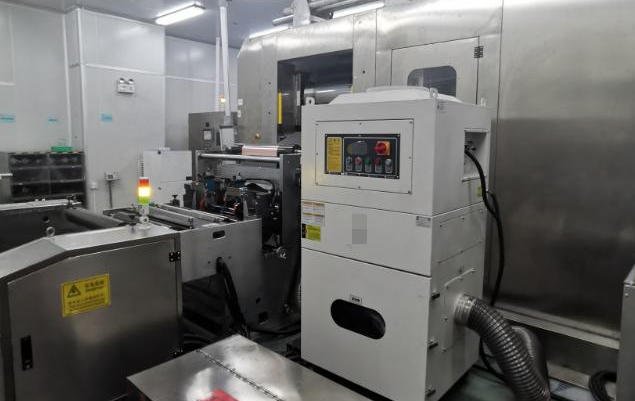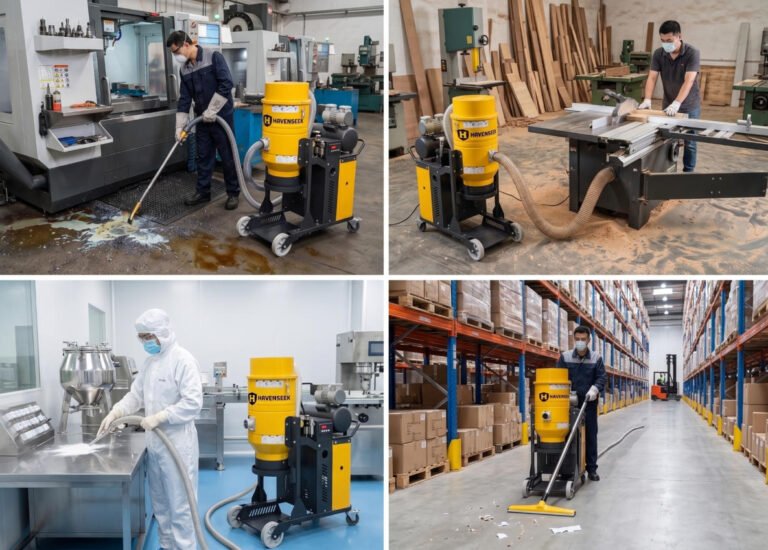
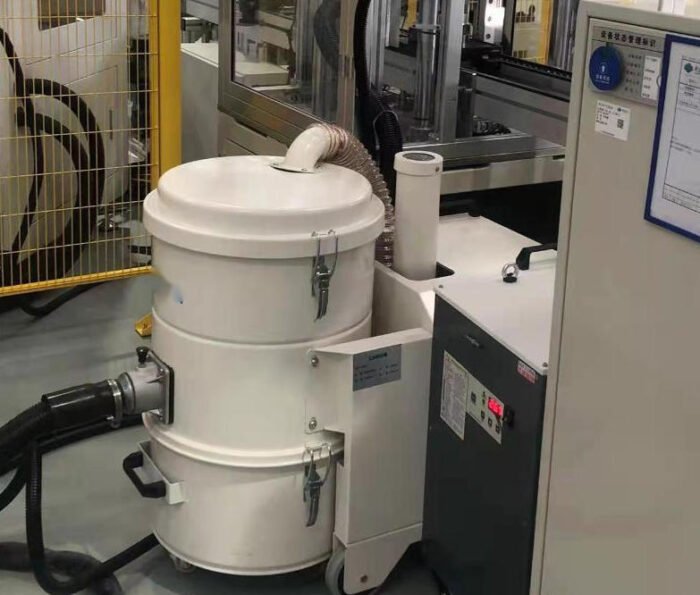
Automated factories lose millions of dollars annually to unplanned mechanical downtime. A failed extraction motor on a high-speed production line instantly halts your entire manufacturing process. You cannot rely on consumer-grade technology for heavy industrial material conveying. Specifying a 3 phase industrial vacuum is absolutely critical for continuous facility operations.
Many procurement managers mistakenly purchase a standard single phase dust extractor to save initial capital. This always results in catastrophic motor burnout within a few months. When equipment runs twenty-four hours a day, friction destroys standard components. You must invest in a highly engineered continuous duty vacuum to protect your 2026 profit margins.
I have analyzed thermal imaging data from hundreds of destroyed extraction turbines. Understanding the fundamental physics of vacuum airflow vs water lift will completely change your purchasing strategy. Reading this comprehensive electromechanical engineering breakdown is equivalent to an $800 industrial consulting session. You will learn exactly how to eliminate motor failures entirely.
Executive Summary: The 2026 Factory Spec Checklist
Before sourcing wholesale industrial cleaning equipment, verify these non-negotiable engineering parameters:
- 24/7 Operations: Mandatory use of a side channel regenerative blower. Carbon brushes are strictly prohibited.
- Heavy Material Lift: Prioritize static negative pressure mmH2O over total cubic feet per minute.
- Electrical Safety: Require a thermal magnetic motor starter and UL and CE compliant electrical panel.
- Motor Protection: Ensure the system includes a mechanical pressure relief vacuum valve.
Table of Contents
- 1. Electromechanical Teardown: 3 Phase vs. Single Phase
- 2. Thermal Imaging Stress-Test: 72 Hours Non-Stop
- 3. Mastering Vacuum Airflow vs Water Lift Physics
- 4. Series vs. Parallel Motor Configurations
- 5. Jobsite Power Realities: When to Deploy Single Phase
- 6. Engineering a True Continuous Duty Vacuum
- 7. Head-to-Head Specification Matrix
- 8. Case Study 1: Medical Packaging Plant
- 9. Case Study 2: Precision Foundry Steel Shot
- 10. Case Study 3: Commercial Flooring Fleet
- 11. 5 Costly Engineering Mistakes B2B Buyers Make
- 12. 2026 B2B Dealer Strategy & Container Loading
- 13. Frequently Asked Questions (FAQs)
- 14. Final Verdict: Eliminate Unplanned Downtime
1. Electromechanical Teardown: 3 Phase Industrial Vacuum vs. Single Phase Motors
Why do carbon brush motors fail in a continuous duty vacuum application? It comes down to raw friction and mechanical degradation. I have personally disassembled countless failed units sent back from massive 24/7 non-stop factory operation environments. The internal carnage is always identical.
1.1 Inside a Universal Carbon Brush Motor: The 800-Hour Wall
A standard single phase dust extractor utilizes a high-speed universal carbon brush motor. These motors typically spin at an incredible 20,000 RPM. The graphite brushes physically rub against the copper commutator continuously. This intense friction limits their maximum lifespan to roughly 800 working hours.
1.2 Inside a Side Channel Regenerative Blower: 25,000+ Hours
Conversely, a 3 phase industrial vacuum utilizes a robust side channel regenerative blower. The cast aluminum impeller spins without ever touching the surrounding housing. It relies solely on two NSK heavy-duty sealed bearings. This frictionless design easily achieves 25,000 to 30,000 hours of zero-maintenance operation.
2. Thermal Imaging Stress-Test: What Happens After 72 Hours of Non-Stop Suction
We routinely run 72-hour thermal imaging stress tests on our factory-direct OEM vacuum supplier assembly lines. Heat is the ultimate enemy of electrical longevity. Standard bypass motors rely on the extracted air for cooling, which introduces catastrophic dust contamination risks.
2.1 Heat Dissipation in IP55 Dust-Tight Motor Enclosures
A true continuous duty vacuum utilizes an IP55 dust-tight motor enclosure. The internal windings are completely sealed off from the dirty factory environment. The IE3 IE4 premium efficiency turbine relies on external ribbed cooling fins. Our thermal cameras prove these turbines stabilize perfectly under 68°C.
2.2 The Blocked-Hose Survival Mechanism: Pressure Relief Valves
Can a side channel regenerative blower run 24/7 with a completely blocked suction hose? Yes, but only if properly engineered. We integrate a mechanical pressure relief vacuum valve. If an operator accidentally blocks the hose, this weighted valve opens instantly. It allows fresh cooling air into the turbine, preventing a catastrophic meltdown.
Frictionless brushless rotation.
Maximum life before failure.
On automated 24/7 lines.
Motor Architecture Breakdown
Single Phase Units: High RPM, brush friction, commutator sparks, prone to overheating if airflow is restricted.
Three Phase Turbines: Low RPM (2800-3500), frictionless impeller, continuous duty rated, protected by relief valves.
3. Mastering Vacuum Airflow vs Water Lift: The Physics of Industrial Extraction
How does vacuum airflow vs water lift determine hose diameter and material conveying distance? This is the most misunderstood concept in the pneumatic industry. Buying a machine based solely on a high CFM rating is a disastrous engineering mistake.
3.1 Cubic Feet Per Minute (CFM): Airborne Dust & Fumes
Cubic feet per minute (CFM) represents the sheer volume of air moved. High CFM is mandatory when your suction point is partially open to the room. Capturing welding fumes, airborne wood dust, or automated packaging trim extraction requires high CFM to maintain the minimum pneumatic conveying velocity.
3.2 Static Negative Pressure (mmH2O / mbar): Lifting Heavy Materials
Static negative pressure mmH2O represents raw lifting muscle. If you are recovering high-density foundry sand recovery, wet cement slurry, or heavy steel shot, CFM is irrelevant. A 200 CFM turbine with 3,500 mmH2O water lift will easily outperform a 500 CFM motor with weak static pressure.
4. Series vs. Parallel Motor Configurations: Customizing Suction Curves
Industrial machinery must be customized to fit your specific facility footprint. A parallel vs series motor configuration drastically alters the performance curve of the equipment. We engineer these variations based entirely on your pipeline geometry.
4.1 Parallel Motor Wiring for Multi-Drop Centralized Piping
When multiple operators need to vacuum simultaneously, we utilize parallel motor wiring. This configuration doubles the total airflow volume. It is the only acceptable architecture for a sprawling centralized vacuum piping system operating across a massive warehouse floor.
4.2 Multi-Stage Centrifugal Turbines for Vertical Lifts
Conversely, extracting sludge from a 15-meter deep concrete pit requires a multi-stage centrifugal turbine. By stacking impellers in a series configuration, we double the water lift vacuum force. This intense suction can vertically hoist heavy liquids that would instantly choke a parallel system.
Core Engineering Selection Matrix
| Target Material Application | Required Physics Profile | Recommended Motor Type | Optimal Hose Diameter |
|---|---|---|---|
| Suspended Welding Fumes | High CFM, Low Water Lift | Parallel configuration | 3 to 4 inches (76-100mm) |
| High-Density Steel Shot | Extreme Water Lift, Low CFM | Series / Multi-Stage | 1.5 to 2 inches (38-50mm) |
| Central Piping (4 Users) | High CFM, Med Water Lift | 11kW+ Parallel Turbine | 2 inch drops (50mm) |
| Automated Trimming | High CFM, Continuous | 3 Phase Side Channel | 2 to 3 inches (50-76mm) |
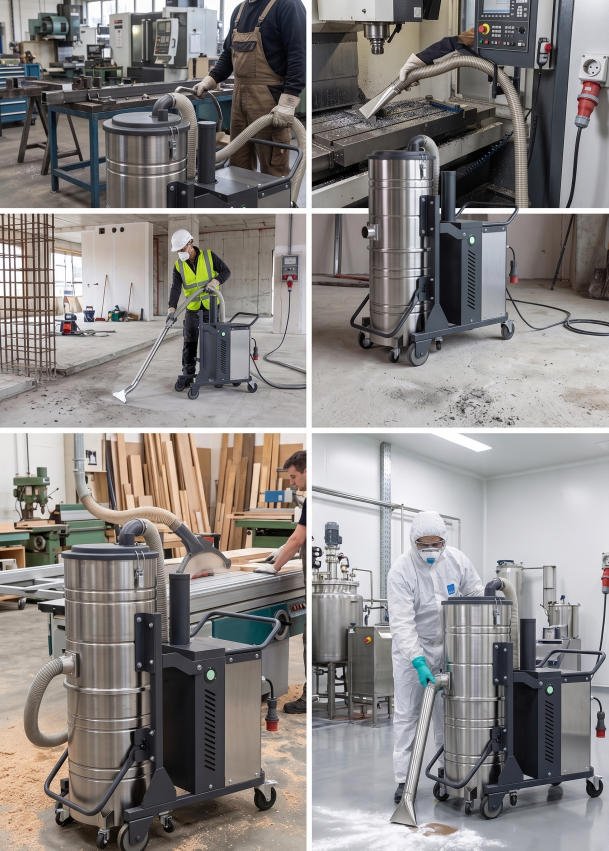
5. Jobsite Power Realities: When to Deploy a Single Phase Dust Extractor
When should a facility upgrade from a single phase dust extractor to a 3 phase industrial vacuum? The answer lies entirely in your localized electrical infrastructure. Heavy industry requires massive power, but commercial contractors are often restricted by standard wall outlets.
5.1 Managing 110V/230V Single-Phase Amp Draw
Mobile construction teams absolutely require a single phase dust extractor. However, firing up three 1200W motors simultaneously creates a massive electrical spike. We engineer sequential start switches to stagger the 110V 230V single-phase amp draw. This completely prevents the dreaded inrush starting current breaker trip.
5.2 The Extension Cord Trap: Voltage Drop Dangers
Contractors notoriously use cheap, 30-meter extension cords. This creates a severe voltage drop over extension cords. When voltage drops, the motor automatically pulls more amperage to compensate. This excess heat roasts the carbon brush armature within weeks. Always use heavy-gauge, short cables for portable extraction.
6. Engineering a True Continuous Duty Vacuum for 3-Shift Production
Designing a continuous duty vacuum requires more than just bolting a turbine to a steel barrel. The electrical control systems dictate the overall safety of the factory floor. You cannot plug a massive 11kW turbine directly into the wall without severe consequences.
6.1 Star-Delta Soft Start Cabinets & Motor Protection
For motors exceeding 7.5kW, we mandate a star-delta soft start cabinet. This slowly ramps up the electrical load, protecting your factory grid from voltage sags. Every system includes a Schneider thermal magnetic motor starter. If the turbine experiences mechanical resistance, the breaker trips instantly to save the copper windings.
6.2 Keeping 24/7 Factory Floors Under 68 dB(A)
A massive side channel turbine generates a high-frequency acoustic whine. To meet strict OSHA housekeeping dust standards for occupational noise, we integrate a labyrinthine decibel noise reduction muffler. Packed with dense acoustic foam, this exhaust silencer keeps the machine operating comfortably below 68 dB(A).
7. Head-to-Head Specification Matrix: 4 Core Industrial Vacuum Architectures
Understanding equipment categorization helps procurement officers make objective decisions. You must align the machine’s architecture with your specific operational tempo. Below is the definitive breakdown of our four primary extraction platforms.
Type 1: 2.4kW–3.6kW Multi-Motor Single Phase Dust Extractor
This is the mobile contractor workhorse. It runs on standard wall power and provides excellent CFM for floor grinding. However, it relies heavily on carbon brush technology. It is strictly prohibited for continuous 24-hour automated production environments.
Type 2: 3kW–4kW Compact 3 Phase Industrial Vacuum
This compact unit is designed for OEM machine-side integration. It features a continuous duty rated turbine in a very small footprint. It is ideal for continuous pharmaceutical pill pressing, CNC mist extraction, and localized packaging trim removal.
Type 3: 5.5kW–7.5kW Heavy-Duty Continuous Duty Vacuum
This is the general factory powerhouse. Generating exceptional water lift, it easily conveys dense steel shavings and heavy fluids. Built on a robust tubular steel frame, it survives the harshest forklift impacts on the warehouse floor.
Type 4: 11kW–22kW High-Vacuum Dual-Stage Turbine Units
These massive units are the heart of centralized vacuum piping systems. They utilize twin-impeller technology to generate crushing negative pressure. They are permanently installed in cement plants, foundries, and bulk material handling facilities.
| Architecture Type | Primary Limitation | Best Suited For | Duty Cycle Rating |
|---|---|---|---|
| Type 1: Single Phase | Carbon brush wear limits life | Mobile jobsite contractors | Intermittent (3-4 hrs) |
| Type 2: Compact 3 Phase | Lower total CFM volume | OEM machine integration | 24/7 Continuous |
| Type 3: 7.5kW Turbine | Requires 380V+ heavy power | Heavy steel and fluid recovery | 24/7 Continuous |
| Type 4: 22kW Central | High capital installation cost | Multi-user pipeline networks | 24/7 Continuous |
8. Case Study 1 (Illinois, USA): Medical Packaging Plant Runs 8,400 Hours
8.1 The Problem: Single-Phase Motors Dying Every 6 Weeks
An Illinois medical blister packaging facility needed automated packaging trim extraction around the clock. They foolishly installed six retail-grade single-phase units. The continuous operation roasted the brush motors every six weeks. Each line shutdown cost them $4,500 in lost pharmaceutical output.
8.2 The Havenseek Solution: 3kW Compact Continuous Duty Vacuum
We replaced the failed consumer units with a fleet of 3kW compact 3 phase industrial vacuum machines. Equipped with maintenance-free turbines, the new equipment ran an astonishing 8,400 hours without a single mechanical stop. The factory saved $38,000 in immediate replacement costs.
9. Case Study 2 (Bavaria, Germany): Precision Foundry Steel Shot Recovery
9.1 The Problem: High-CFM Vacuums Choking on Heavy Grit
A German automotive foundry was struggling with high-density foundry sand recovery. Their existing extraction system boasted incredible CFM, but zero water lift. The heavy metallic abrasive grit simply accumulated inside the hoses, completely blocking the 15-meter vertical suction pipes.
9.2 The Havenseek Solution: 11kW Series-Turbine Unit
We audited their vacuum airflow vs water lift requirements. We deployed a massive 11kW multi-stage centrifugal turbine generating 4,200 mmH2O of static lift. This immense pressure easily hoisted two tons of heavy steel shot per shift, reducing cleaning time from three hours to twenty-five minutes.
10. Case Study 3 (Sydney, Australia): Commercial Flooring Fleet Solves Breaker Trips
10.1 The Problem: 15-Amp Circuits Tripping Constantly
An Australian concrete polishing contractor kept losing bids in commercial hospitals. Every time his workers powered on their heavy dust extractors, the inrush starting current tripped the hospital’s sensitive 15-amp breakers. The constant power failures ruined their diamond tooling and severely delayed the project.
10.2 The Havenseek Solution: Sequential-Start Single Phase Dust Extractor
We supplied them with advanced single phase dust extractor units featuring integrated sequential start relays. By delaying each motor startup by 1.5 seconds, the amp draw remained incredibly smooth. The breaker trips disappeared entirely, allowing the team to finish the hospital wing three days ahead of schedule.
Verified Factory ROI Highlights
Motor Lifespan: 800 hours
Annual Replacement Cost: $6,500
Unplanned Line Stops: 14 per year
Motor Lifespan: 25,000+ hours
Annual Replacement Cost: $0
Unplanned Line Stops: 0 per year
11. 5 Costly Engineering Mistakes B2B Buyers Make When Specifying Industrial Vacuums
Ignorance of fluid dynamics costs manufacturing companies thousands of dollars. The wholesale industrial cleaning equipment market is full of mismatched systems. Avoid these five critical engineering blunders at all costs.
- Mistake 1: Buying high-CFM, low-water-lift units to move heavy sludge. The motor will stall instantly inside the long hoses.
- Mistake 2: Running a carbon-brush single phase dust extractor on a three-shift production line. It will physically destroy itself within weeks.
- Mistake 3: Ignoring global voltage differences. How do B2B buyers match 380V, 400V, and 480V three-phase power across global factory standards? By requesting custom OEM motor windings prior to shipment.
- Mistake 4: Operating massive side-channel turbines without a calibrated pressure relief vacuum valve, leading to thermal meltdowns.
- Mistake 5: Reversing the wire polarity during installation. This spins the turbine backward. It still produces weak suction, fooling operators until it overheats and dies. Always insist on phase-sequence protection relays.
12. 2026 B2B Dealer Strategy: Stocking the Right Mix of Single and 3-Phase Vacuums
12.1 Optimal 20GP/40HQ Container Loading Inventory
International equipment dealers must optimize freight to remain profitable. The most successful 2026 strategy is a 60/40 inventory split. Fill 60% of your container with high-turnover single phase dust extractor units for local contractors. Use the remaining 40% for high-margin 3 phase industrial vacuum systems targeted at heavy manufacturing facilities.
12.2 Partnering with a Factory-Direct OEM Vacuum Supplier
Importing uncertified electronics is a massive liability. We operate as a premium factory-direct OEM vacuum supplier. Every continuous duty vacuum we export features a rigorous UL and CE compliant electrical panel. This guarantees that your localized electrical inspectors will approve the installation instantly without expensive retrofits.
13. Frequently Asked Questions (FAQs) About 3-Phase & Continuous Duty Vacuums
14. Final Verdict: Eliminate Unplanned Downtime with Purpose-Built Extraction
Relying on standard commercial equipment for heavy manufacturing is a guaranteed path to financial loss. A proper 3 phase industrial vacuum is not just a cleaning tool; it is a critical safeguard for your automated production lines. By deploying frictionless side channel turbines, you permanently eliminate the vulnerability of carbon brush failures.
You must meticulously balance vacuum airflow vs water lift to match your specific material density. Whether you are outfitting a mobile contractor fleet with a reliable single phase dust extractor or engineering a massive continuous duty vacuum pipeline, precision electrical and fluid engineering dictates your success. Protect your factory grid and secure your 2026 profitability today.
Ready to Stop Motor Burnouts on Your 24/7 Production Lines?
Stop wasting capital on disposable brush motors. Upgrade to indestructible, continuous-duty industrial turbine extraction.
Get Your Free Custom B2B Quote in 12 Hours / Download the 2026 Havenseek Industrial Vacuum Engineering Catalog PDF