
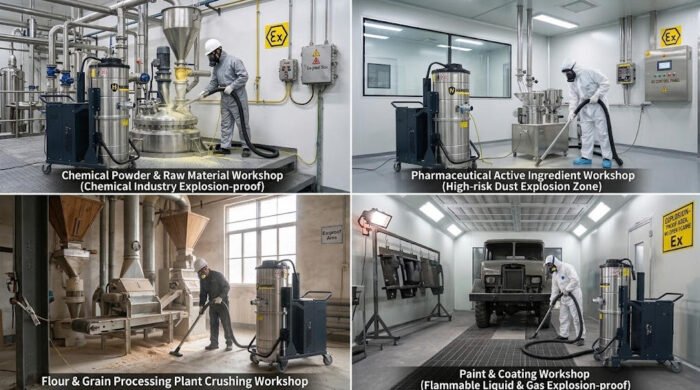
Written by Marcus Vance – Senior Chief Engineer & Technical Export Director at Havenseek Industrial vacuum cleaner. With over 16 years of experience engineering ATEX & NFPA-compliant extraction systems, I have successfully equipped more than 920 manufacturing plants across 55 countries with safe, compliant, and cost-effective solutions.
Are you risking catastrophic factory downtime by ignoring the hidden dangers of airborne particulate accumulation?
Recent data from the 2025-2026 industrial safety reports reveals a shocking trend. Over 40% of standard manufacturing facilities operate without adequate safety measures against airborne particulate explosions. Securing a reliable explosion proof vacuum is no longer just a luxury. It is a strict legal requirement enforced by global safety authorities. Using improper cleaning equipment in hazardous zones frequently leads to massive fines. More importantly, it puts your entire workforce in extreme danger.
Many procurement managers mistakenly believe that a standard shop vacuum is sufficient for daily cleanups. However, a proper ATEX dust extractor is engineered with completely different architectural principles. In this comprehensive guide, I will walk you through everything you need to know. We will deeply analyze why investing in a certified anti static industrial vacuum is critical for your bottom line. We will also tear down the exact mechanics of secure combustible dust collection systems. Reading this guide will save you thousands of dollars in compliance fines and severe equipment failure.
Why should you read this entire engineering breakdown? Because sourcing industrial cleaning equipment is incredibly risky if you lack technical knowledge. I will expose the common tricks used by unverified suppliers. I will show you how to calculate your true five-year return on investment. Furthermore, I will provide actionable strategies for navigating complex global safety directives.
Executive Summary: 60-Second B2B Takeaways
- Compliance Alert: The OSHA combustible dust National Emphasis Program is aggressively targeting non-compliant facilities in 2026.
- Engineering Fact: A genuine explosion proof vacuum requires a multi-point equipotential bonding system to prevent internal spark ignition.
- Sourcing Strategy: Always verify full-assembly certifications rather than accepting component-level approvals from overseas suppliers.
- TCO Advantage: Implementing a manual reverse pulse jet filter cleaning system reduces annual maintenance budgets by up to 60%.
Table of Contents
- 1. Why Combustible Dust Collection Is Under Intense Global Scrutiny in 2025–2026
- 2. When Do You Legally Need an Explosion Proof Vacuum?
- 3. Inside an Anti Static Industrial Vacuum: A 5-Layer Engineering Tear-Down
- 4. Standard HEPA vs. ATEX Dust Extractor Differences
- 5. Navigating Global Standards: ATEX vs. NFPA 652
- 6. Verifying Genuine ATEX Certificates from Manufacturers
- 7. Pneumatic vs. Electric Explosion Proof Vacuum
- 8. The 5-Year Total Cost of Ownership (TCO) Breakdown
- 9. Combustible Dust Collection in Action: 3 Factory Retrofits
- 10. Shop-Floor Ergonomics for Machine Operators
- 11. Costly Mistakes B2B Buyers Make During Procurement
- 12. Factory Direct Wholesale & Partnership Opportunities
- 13. Frequently Asked Questions (FAQ)
1. Why Combustible Dust Collection Is Under Intense Global Scrutiny in 2025–2026
The landscape of industrial manufacturing safety has fundamentally shifted. Plant managers can no longer ignore the severe risks associated with airborne particulates. Global insurance agencies and government regulators have drastically tightened their inspection protocols. Consequently, operating an uncertified cleaning system is a direct threat to your business continuity. Safety inspectors now actively look for robust combustible dust collection strategies during routine audits.
1.1 The 2025–2026 Surge in OSHA NEP Inspections and Insurance Premium Hikes
If you operate a facility in North America, you must understand the current regulatory climate. The OSHA combustible dust National Emphasis Program has escalated its random factory inspections by nearly 35% this year. Failing to provide a proper NFPA 652 compliant vacuum results in devastating immediate consequences. Inspectors issue severe citations that can temporarily shut down entire production lines. Furthermore, insurance underwriters now require proof of an ATEX dust extractor installation before renewing premium policies.
1.2 Understanding the Dust Explosion Pentagon in Modern High-Speed Manufacturing
To grasp why these regulations exist, we must examine the science of deflagration. An explosion requires five elements: oxygen, heat, fuel, dispersion, and confinement. High-speed manufacturing environments constantly generate fine particulate fuel. When this dust is dispersed inside a confined space, a microscopic spark can trigger a disaster. Conducting professional minimum ignition energy MIE dust testing reveals precisely how little energy is needed. Therefore, controlling that invisible ignition source is the primary function of an explosion proof vacuum.
Average OSHA Fine for Dust Violations in 2025
Increase in Corporate Insurance Premiums
2. When Do You Legally Need an Explosion Proof Vacuum?
Many B2B buyers frequently ask me, “When do you legally need an explosion proof vacuum?” The answer lies strictly in your facility’s hazard classification. If your operations generate particulates that can ignite under specific concentrations, standard equipment is illegal. You must legally deploy specialized extraction systems when working within designated hazardous locations. Ignorance of these zoning laws is never an acceptable defense during a compliance audit.
2.1 Decoding Combustible Dust Classes: Kst Values and Pmax Thresholds
Safety engineers measure explosive potential using specific engineering metrics. The Kst value determines the normalized rate of pressure rise during a deflagration event. The Pmax threshold indicates the maximum pressure generated in a closed vessel. If your material testing yields a Kst value greater than zero, your dust is explosive. In these specific scenarios, utilizing an ATEX Zone 21 Zone 22 vacuum cleaner is completely mandatory for legal operation.
2.2 Why Standard Commercial Shop Vacuums Are Ticking Time Bombs
I have personally witnessed countless facilities trying to save money by purchasing standard commercial vacuums. This is an incredibly dangerous financial decision. Standard vacuums utilize carbon brush commutators that constantly generate internal electrical arcing. Furthermore, their cheap plastic canisters rapidly build up immense static friction during operation. When this static charge discharges near airborne particulates, the resulting explosion is instantaneous. A certified anti static industrial vacuum eliminates these specific catastrophic risks.
3. Inside an Anti Static Industrial Vacuum: A 5-Layer Engineering Tear-Down
Let us perform a deep engineering tear-down from a manufacturing perspective. Building a genuine explosion proof vacuum requires meticulous attention to microscopic details. If a single grounding wire is compromised, the entire machine becomes a lethal hazard. We engineer five distinct physical defense layers to guarantee absolute operational safety.
3.1 How Does an Anti Static Industrial Vacuum Prevent Internal Spark Ignition?
How does an anti static industrial vacuum prevent internal spark ignition? The secret lies in electrical continuity. Every component must be electrically bonded to prevent isolated charge accumulation. We utilize a highly sophisticated multi-point equipotential bonding system throughout the entire chassis. This specific system ensures that the total electrical resistance of the machine remains strictly below one megaohm. Therefore, static electricity harmlessly dissipates directly into the grounded floor.
3.2 Conductive PTFE HEPA H14 Filter Media vs. Cheap Coated Cartridges
The filtration media is the beating heart of any robust ATEX dust extractor. Cheap manufacturers merely spray a thin conductive coating over standard paper filters. This terrible coating degrades completely after just two washing cycles, secretly destroying the safety mechanism. Instead, we mandate the use of a fully conductive PTFE HEPA H14 filter for hazardous environments. These premium filters integrate carbon fibers directly into the substrate, offering permanent static dissipation and 99.995% efficiency.
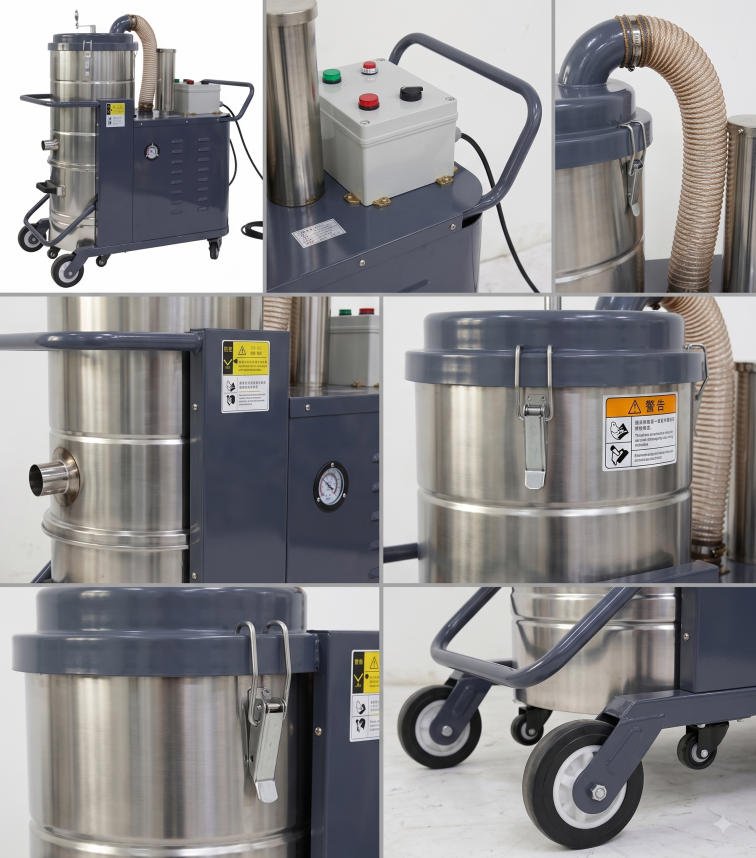
3.3 304 Stainless Steel Grounding Container and Spark-Free Cast Casters
The collection bin requires extreme structural integrity to handle abrasive materials. Never accept a carbon steel container that has been cheaply powder-coated. We exclusively manufacture our bins using a heavy-duty 304 stainless steel grounding container. This premium alloy prevents corrosive degradation while maintaining perfect electrical conductivity. Additionally, the machine must roll on specialized spark-free cast casters to eliminate frictional sparks on concrete floors.
4. What Is the Difference Between an ATEX Dust Extractor and a Standard HEPA Vacuum?
A common dangerous misconception is equating high filtration efficiency with explosion safety. What is the difference between an ATEX dust extractor and a standard HEPA vacuum? A standard HEPA unit traps fine particles but lacks ignition source control. An explosion proof vacuum, however, is thermally and electrically sealed against the outside environment. The engineering gap between these two machines is vast and technically complex.
4.1 Motor Architecture: Brushless Ex-d Enclosures vs. Carbon Brush Commutators
The motor is the most critical component determining machine safety. Standard vacuums use cheap carbon brushes that constantly spark during rotation. In stark contrast, a brushless motor explosion proof extractor operates with zero internal contact friction. Furthermore, the electrical components are sealed within an IP65 dust tight electrical enclosure. This heavy-duty enclosure guarantees that explosive particulates cannot breach the motor housing and reach dangerous temperature thresholds.
4.2 Static Dissipative Hose and Accessories: Where 70% of Ignition Failures Start
An often-overlooked failure point is the accessory package. Even if the main chassis is certified, connecting a standard PVC hose creates a lethal hazard. The rapid movement of dust through a plastic tube generates massive triboelectric charges. Therefore, utilizing a certified static dissipative hose and accessories is absolutely mandatory. The hose must contain a continuous embedded copper wire connecting the cleaning nozzle directly to the grounded machine.
5. Navigating Global Standards: ATEX Zone 20/21/22 vs. North American NFPA 652 & Class II
For B2B wholesale buyers operating globally, understanding regional safety directives is paramount. The European Union relies on the strict ATEX directive for hazardous environments. Meanwhile, North America enforces OSHA and National Fire Protection Association guidelines. You must accurately map these distinct standards to procure the correct equipment for your specific factory location. Misinterpreting these regulations leads to immediate compliance failures.
5.1 Mapping ATEX Zone 21 Zone 22 Vacuum Cleaner Ratings to Class II Division 1 & 2
Translating European certifications into North American equivalents requires precision. An ATEX Zone 21 Zone 22 vacuum cleaner is designed for areas with occasional or short-term combustible dust clouds. This classification roughly translates to the North American Class II Division 1 dust collector standard. Purchasing equipment with overlapping international certifications ensures your facility passes audits regardless of geographical location. Always demand dual-certified equipment for maximum flexibility.
5.2 Building Your Dust Hazard Analysis DHA Equipment Checklist Before Requesting Quotes
Never request a supplier quote without first evaluating your internal facility risks. You must meticulously complete a comprehensive dust hazard analysis DHA equipment checklist. This checklist should document your material’s minimum ignition energy, the required extraction volume, and the facility zoning. Providing this exact technical data allows manufacturers to engineer a bespoke combustible dust collection solution. Guessing your specifications will result in purchasing inadequate or overpriced machinery.
6. How Do You Verify a Genuine ATEX Certificate When Sourcing from Overseas Manufacturers?
Importing industrial equipment presents unique procurement challenges. How do you verify a genuine ATEX certificate when sourcing from overseas manufacturers? The market is unfortunately flooded with counterfeit documents and misleading compliance claims. Protecting your company requires strict due diligence and a deep understanding of certification protocols. I always advise buyers to meticulously scrutinize the engineering data plates before finalizing any transaction.
6.1 Reading the Ex Marking Plate: II 2D Ex h IIIB T135°C Db Explained
A legitimate explosion proof vacuum will feature an engraved, tamper-proof marking plate. You must decode the specific alphanumeric string to ensure environmental compatibility. For example, “T135°C” indicates the absolute maximum surface temperature the machine will reach under heavy load. The “IIIB” designation confirms suitability for non-conductive dust environments. If a supplier cannot clearly explain these specific markings, immediately cancel your procurement negotiations.
6.2 Component-Level vs. Full-Assembly Certification: The Hidden Compliance Trap
The most dangerous trap in overseas sourcing is accepting component-level certificates. A shady supplier might use a certified motor but place it inside a non-grounded plastic housing. During an audit, inspectors demand full-assembly certification for the entire ATEX dust extractor. The entire complete system, including hoses and filtration chambers, must be tested as a single integrated unit. Never accept a certificate that only covers isolated internal electrical components.
7. Is a Pneumatic or Electric Explosion Proof Vacuum Better for Combustible Dust Collection?
Choosing the right power source dictates long-term performance and safety. Is a pneumatic or electric explosion proof vacuum better for combustible dust collection? The answer depends entirely on your existing factory infrastructure and operational duration. Each power configuration offers distinct mechanical advantages for managing hazardous materials. We must analyze the specific engineering constraints of your production environment.
7.1 Pneumatic Air Operated Explosion Proof Vacuum: Zero Moving Parts for Extreme Zones
For the most volatile manufacturing environments, pneumatic systems are unparalleled. A pneumatic air operated explosion proof vacuum functions using a venturi system driven by compressed air. Because it contains absolutely zero moving electrical parts, the ignition risk is virtually eliminated. However, these powerful systems require a massive and consistent supply of factory compressed air. You must verify your compressor’s CFM output before deploying this specific pneumatic technology.
7.2 Continuous Duty 24/7 Industrial Vacuum: Side-Channel Blowers for Heavy Production Lines
Automated production lines require relentless, uninterrupted extraction power. In these scenarios, a continuous duty 24/7 industrial vacuum powered by an electric side-channel blower is vastly superior. These heavy-duty induction motors are specifically engineered to run continuously without overheating or losing suction. While the initial capital expenditure is higher, their extreme reliability makes them ideal for central combustible dust collection networks.
8. The 5-Year Total Cost of Ownership (TCO) Breakdown for B2B Buyers
Smart procurement executives never buy based solely on the initial sticker price. You must carefully calculate the five-year Total Cost of Ownership (TCO) to determine true value. An inherently cheap machine will quickly drain your budget through relentless maintenance and rapid consumable replacement. Investing in a premium explosion proof vacuum yields a significantly higher long-term return on investment. Let us break down the real financial metrics of industrial cleaning equipment.
8.1 Calculating Hidden Costs: Compressed Air Consumption vs. kW Electricity Draw
The energy source you choose drastically impacts your monthly operational overhead. Pneumatic vacuums are incredibly safe, but generating compressed air is notoriously expensive. Conversely, an electric ATEX dust extractor utilizes a highly efficient brushless motor that minimizes kilowatt consumption. Over a demanding five-year production cycle, the electrical efficiency often offsets the initial higher purchase price. You must calculate these specific utility costs based on your local industrial energy rates.
8.2 How Manual Reverse Pulse Jet Filter Cleaning Slashes Filter Replacement Budgets by 60%
Filter replacement is the largest recurring expense in industrial dust management. Fine particulates quickly blind standard filters, destroying suction performance and requiring frequent disposal. We solve this expensive problem by integrating a manual reverse pulse jet filter cleaning mechanism. This innovative system blasts high-pressure air through the filter, dislodging compacted dust directly into the collection bin. This specific engineering feature dramatically extends filter life and slashes maintenance budgets.
9. Combustible Dust Collection in Action: 3 Real-World Factory Retrofits
Theoretical engineering is meaningless without proven real-world execution. Let us review three actual B2B case studies where we successfully deployed combustible dust collection systems. These factories faced severe regulatory fines and catastrophic safety hazards before our intervention. By analyzing these diverse industrial environments, you will understand how tailored engineering solves complex extraction problems.
9.1 Case Study 1: Aerospace Additive Manufacturing
A German aerospace facility required a specialized aluminum and titanium dust extractor for their 3D printing suites. Reactive metals pose extreme exothermic risks if exposed to ambient air. We engineered a bespoke immersion liquid bath dust collector that instantly submerged the volatile metallic particulates in inert fluid. This highly customized wet-type explosion proof vacuum successfully eliminated the thermite reaction risk, passing strict European inspections instantly.
9.2 Case Study 2: High-Volume Commercial Bakery
An Illinois-based industrial bakery faced massive static accumulation from airborne sugar and flour. They urgently needed a compliant food grade pharmaceutical flour dust vacuum that prioritized hygiene and safety. We installed an ATEX dust extractor featuring fully polished stainless steel contact parts and FDA-approved static dissipative hoses. The new system eliminated cross-contamination risks while strictly adhering to OSHA combustible dust mandates.
9.3 Case Study 3: Fine Chemical Coating Plant
A major Southeast Asian powder coating plant required a massive centralized extraction network. Due to the high volume of organic polymers, the risk of pressure buildup was immense. We designed a heavy-duty system equipped with a certified explosion relief vent rupture disc. In the unlikely event of an internal ignition, this specific safety disc intentionally ruptures, safely directing the hazardous blast wave outside the facility.
10. Shop-Floor Ergonomics: What Machine Operators Actually Care About
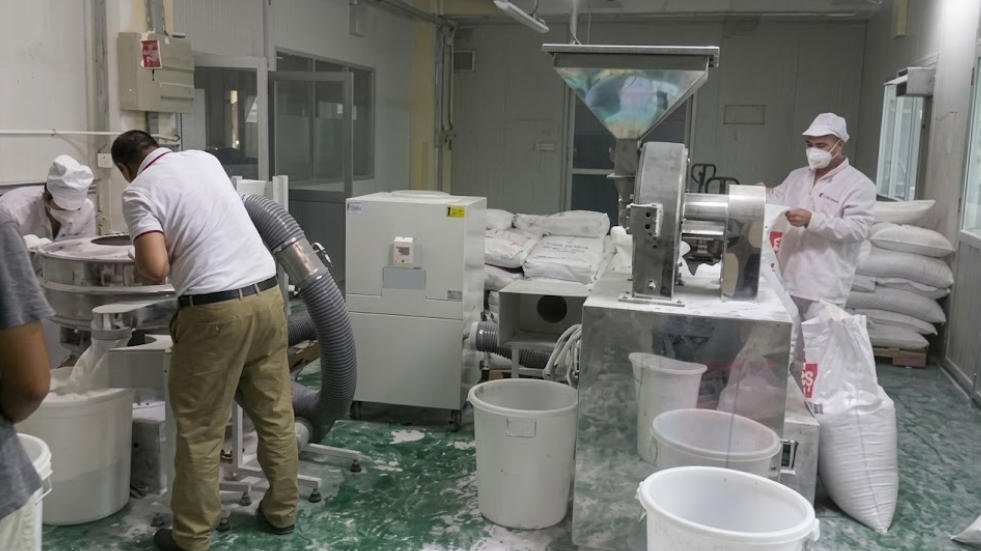
Engineers design equipment for safety, but operators actually have to use it daily. If an explosion proof vacuum is too heavy or complicated, workers will intentionally bypass safety protocols. Ensuring excellent shop-floor ergonomics is the ultimate key to maintaining long-term regulatory compliance. Equipment must be robustly engineered yet highly maneuverable in cramped factory aisles. Listening to operator feedback is essential for successful machinery deployment.
10.1 Solving Suction Drop and Heavy Bin Lifting with Drop-Down Trolley Systems
Industrial metal dust is incredibly dense and heavy. Forcing an operator to manually lift a 100-liter collection bin causes severe workplace injuries. We engineered an independent drop-down trolley system attached directly to the ATEX dust extractor chassis. A single operator can now effortlessly detach and roll the heavy stainless steel bin to the disposal area. This simple ergonomic feature drastically improves daily cleaning efficiency and user compliance.
10.2 Acoustic Silencing and Mobility in Cramped Production Aisles
Excessive noise pollution creates a highly stressful and exhausting manufacturing environment. Workers simply refuse to operate deafening equipment for extended periods. Our continuous duty 24/7 industrial vacuum models feature advanced acoustic silencing foam, reducing operational noise below 72 dBA. Combined with perfectly balanced chassis weight distribution, operators can easily maneuver the heavy equipment through tightly packed production zones without intense physical strain.
11. 5 Costly Mistakes B2B Buyers Make When Sourcing Explosion Proof Equipment
Throughout my 16 years of consulting, I have seen procurement teams make identical, highly expensive errors. Buying an explosion proof vacuum requires meticulous attention to process engineering. Attempting to cut corners or combine incompatible materials inevitably results in disastrous thermal events. You must strictly avoid these critical procurement mistakes to protect your facility and workforce.
11.1 Mixing Dry Reactive Metal Dusts with Ferrous Sparks in the Same Collector
The most lethal mistake is utilizing one machine for multiple distinct processes. Mixing aluminum dust with ferrous steel grinding sparks creates a deadly thermite reaction inside the collection bin. You must dedicate specific equipment solely for combustible dust collection and never cross-contaminate materials. Implementing strict physical separation protocols for reactive metals is an absolute safety necessity.
11.2 Ignoring Filter Clogging: How Differential Pressure Sensor IoT Dust Monitor Prevents Thermal Runaway
Operating a vacuum with heavily blinded filters forces the motor to overheat rapidly. In modern 2026 designs, we integrate a highly sensitive differential pressure sensor IoT dust monitor. This smart technology constantly measures negative pressure drops across the filtration media. If the filters become critically clogged, the system automatically triggers a visual alarm and safely shuts down before thermal runaway occurs.
12. Factory Direct Explosion Proof Vacuum Wholesale: How to Partner with Havenseek
Sourcing directly from an established manufacturer guarantees superior pricing and customized engineering support. At Havenseek Industrial vacuum cleaner, we specialize in factory direct explosion proof vacuum wholesale partnerships. We bypass expensive middlemen to deliver premium ATEX and NFPA-compliant machinery directly to global distributors and massive end-users. Our dedicated engineering team works closely with you to solve complex extraction challenges seamlessly.
12.1 Our 12-Point Pre-Shipment Anti-Static Continuity and Vacuum Pressure Test Protocol
We absolutely refuse to compromise on final product safety. Before any anti static industrial vacuum leaves our production line, it undergoes a rigorous 12-point quality assurance protocol. We utilize highly calibrated megohmmeters to physically verify perfect electrical continuity from the hose nozzle down to the grounding chain. Furthermore, we conduct extended vacuum pressure load testing to guarantee flawless continuous performance.
12.2 Customizing Voltage, Hose Diameters, and OEM Branding for Regional Distributors
International industrial markets require massive technical flexibility. We actively support our wholesale partners by engineering custom voltage configurations (220V, 380V, 480V, 60Hz) for different regions. We meticulously adapt hose diameters and accessory toolkits to match specific regional production needs. By offering comprehensive OEM branding services, we help aggressive distributors rapidly dominate their local combustible dust collection markets.
13. Frequently Asked Questions About Explosion Proof Vacuums & ATEX Dust Extractors
Below are the most critical technical questions I receive weekly from factory procurement managers and EHS directors regarding hazardous extraction systems.
Q1: Can I retrofit my existing industrial vacuum to make it an explosion proof vacuum?
Absolutely not. You cannot legally or safely retrofit a standard machine. A proper ATEX dust extractor requires specialized brushless motors, an IP65 dust tight electrical enclosure, and comprehensive multi-point grounding. Modifying standard equipment invalidates all safety certifications and creates immense legal liability.
Q2: How often should the grounding continuity of an anti static industrial vacuum be tested?
You must test the grounding continuity every single day before operation. Use a calibrated multimeter to ensure the resistance between the cleaning nozzle and the grounded chassis remains strictly below 1 megaohm. A broken grounding wire instantly compromises the entire combustible dust collection system.
Q3: When do I need an immersion liquid bath dust collector instead of a dry filter system?
You strictly require an immersion liquid bath dust collector when processing highly reactive Group E metallic dusts, such as aluminum, titanium, or magnesium. These specific materials require immediate inert liquid quenching to prevent devastating thermite reactions.
Q4: Does an ATEX dust extractor legally satisfy OSHA and NFPA 652 requirements in the US?
Yes, provided the equipment carries dual certifications. An ATEX Zone 21 Zone 22 vacuum cleaner is highly robust, but North American inspectors look specifically for Class II Division 1 or NFPA 652 compliance. Ensure your supplier explicitly guarantees alignment with North American directives.
Q5: What air compressor capacity is required for a pneumatic air operated explosion proof vacuum?
A heavy-duty pneumatic air operated explosion proof vacuum requires substantial compressed air. You typically need a dedicated compressor capable of delivering at least 60 to 100 CFM at 90 PSI to achieve optimal venturi suction performance.
Q6: How do we safely dispose of collected dust from a combustible dust collection system?
Disposal protocols dictate that you must empty the 304 stainless steel grounding container immediately after each shift. The hazardous dust must be carefully transferred into sealed, conductive, or static-dissipative heavy-duty bags and removed entirely from the main production facility.
Q7: What is the typical lead time for factory direct explosion proof vacuum wholesale orders?
For standard equipment, lead times range from 15 to 25 days. However, if your facility requires heavily customized voltages or a specialized continuous duty 24/7 industrial vacuum, the engineering and testing process extends the timeline to approximately 40 days.
Q8: Why must HEPA H14 filters be paired with a pre-filter in fine combustible dust collection?
A conductive PTFE HEPA H14 filter is highly sensitive and expensive. Without a robust pre-filter or cyclone separator, heavy particulate volumes will instantly blind the delicate HEPA media. The pre-filter captures 95% of the bulk dust, extending the lifespan of the critical absolute filter.
14. Final Verdict: Secure Your Facility Without Overpaying for Middleman Markups
Investing in an authentic explosion proof vacuum is the most critical safety decision your procurement team will make this year. Do not gamble your factory’s future on uncertified equipment or overpriced middlemen. By partnering with Havenseek Industrial vacuum cleaner, you secure elite ATEX and NFPA engineering directly from the manufacturer.
Get Free Quote in 12 Hours & Download 2026 Catalog PDF